Tuesday, December 13, 2005

A peacemaker in the Marine Band

I have been thinking a lot about Tom Fox and his Christian Peacemaker team members who are captives in Iraq, but haven't felt that there was anything I could say that others weren't saying better. But today I found this paragraph at the bottom of the CPT's web site:

A note on Tom Fox's Career as a Musician in the Marine Band
Tom Fox was a music major in college. He graduated at the height of the Viet Nam war in May of 1973. He was already opposed to war and was unwilling to participate in the United States military actions in Viet Nam. Tom auditioned and was accepted into the Marine Band, based in Washington D.C. This fulfilled his military obligation. Tom played clarinet with the Band as a professional musician in order to support his family. He received no military training. He left the Marine Band to work as a grocer.


I love this fact and the image of the pacifist clairnet player in the Marine Band. It reminds me of the Yellow Submarine where Sgt. Pepper's Lonely Hearts Club Band brought music back to Pepperland, converted the Blue Meanies, and thawed all the people frozen by the Meanies.

Tom's story also suggests to me writing a children's story of how peaceniks infiltrated the opposing sides' military bands and at some crises point did something to end the war between their nations, like leading the armies to march in opposite directions from each other, or continuing the pre-battle music so long that the battle couldn't begin, or accompanied the singing of Christmas carols across no-mans land, or songs that the soldiers' mothers taught them so that they drop their weapons, cry, hug each other, and clean up the mess they made. . . .

Of course, the situation faced by Tom and his comrades is no laughing matter or storybook fantasy. But neither was their conviction that they could enter the lion's den or the fiery furnace and witness to Truth.

I can't help hoping that Tom's music will bring strength and comfort to him and the others as they face their ordeal.

Saturday, December 10, 2005

The coat has been hung on the peg. In memoriam Eugene McCarthy

Gene McCarthy was a prophet who read the signs of his times and had the moral courage to accept his call, not only as a a politician, but also as a poet when the nation needed a poet more than anything. One of the few fortunate to have moved the course of history, he was -- for a time -- the right man at the right time. We need his kind now more than ever.

Two poems by Eugene McCarthy (1916 - 2005)

COURAGE AFTER SIXTY

Now it is certain.
There is no magic stone.
No secret to be found.
One must go
With the mind's winnowed learning.
No more than the child's handhold
On the willows bending over the lake,
On the sumac roots at the cliff edge.
Ignorance is checked,
Betrayals scratched.
The coat has been hung on the peg,
The cigar laid on the table edge,
The cue chosen and chalked,
The balls set for the final break.
All cards drawn,
All bets called.
The dice, warm as blood in the hand,
Shaken for the last cast.
The glove has been thrown to the ground,
The last choice of weapons made.

A book for one thought.
A poem for one line.
A line for one word.

"Broken things are powerful."
Things about to break are stronger still.
The last shot from the brittle bow is truest.

THE MAPLE TREE

The maple tree that night
Without a wind or rain
Let go its leaves
Because its time had come.
Brown veined, spotted,
Like old hands, fluttering in blessing,
They fell upon my head
And shoulders, and then
Down to the quiet at my feet.
I stood, and stood
Until the tree was bare
And have told no one
But you that I was there.

Wednesday, December 07, 2005

Non-conformists Unite!

Finally, a union for liberal Friends. A great number of persons to be gathered. We could sing the songs of ourselves together in different keys at the same time in one grand cacaphony of unified diversity. We could all go on strike, but at different times, whenever we felt like it. We no long need to hide our skepticism under our bonnets; we can wear it boldly on our bumpers and lapels, whenever we're led to.
I'd write more, but I have to get my tongue out of my cheek.

Saturday, November 26, 2005

Back home again in Indiana

I'm writing this from my brother-in-law's comfortable house in Carmel, Indiana, just north of Indianapolis, early in the Saturday morning after Thanksgiving. We drove down here a week ago to visit their family (they have kids the same ages as ours) and then to Seymour, Indiana, where my brother and his wife and four children live. My parents and my eldest daughter and her boyfriend were there, too; we came back to Carmel today and will drive home to Minneapolis on Sunday. It's been a lovely week of family time and reconnecting.

I lived in Valparaiso, Indiana, for most of 20 years (about two of those years were lived abroad -- in Chicago) from 1971-91. Though I had a rich life during those years as a student and young parent and felt that I was a member of the community in which I lived, I can categorically state that I have never felt like a Hoosier. Not once. Hoosierdom was a part of Indiana not from where I was from.

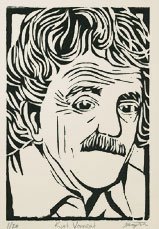
Hoosierness is a kind of sentimental sickness that for reasons I'll never understand is taken as civic virtue here. Kurt Vonnegut, a native of Indianapolis (and born on Nov. 11) used Hoosierness as the quintessential example of a Granfaloon, summarized here by Karen Coyle:

One of the basic concepts of Bokononism, the secretive island religion of Kurt Vonnegut's Cat's Cradle, is that of a granfalloon. A granfalloon is a recognized grouping of people that, underneath it all, has no real meaning. The prototypical granfaloon in Vonnegut's book is Hoosiers: the main character of the book finds himself journeying to an island nation in the company of fellow Indianans, but other than the fact that they hail from the same state they have no significance in each other's lives.


Only Son and I visited the state capital on Tuesday and ran smack dab into this kind of granfallonery on a plaque bolted on the wall of the main, central room of the first floor, under the dome of the state capitol building:

Ain't God good to Indiana?
Folks, a feller never knows
Just how close he is to Eden
Till, sometime, he ups an' goes
Seekin' fairer, greener pastures
Than he has right here at home,
Where there's sunshine in the clover
An' honey in th' comb;
Where the ripples on th' river
Kinda chuckles as they flow--
Ain't God good to Indiana?
Ain't He, fellers? Ain't He, though?

Posted in bronze in the state fargin capitol, mind you. I'll spare you the final two verses of this doggerel. You can read the rest here. This is Hoosierdom at its finest.

But in the secrecy of this blog, I will confess one itsy-bitsy trace of the Hoosierness. Beginning years ago, when both Eldest Daughters were very young, whenever we entered Indiana on a car trip I sang the old jazz standard, Back Home Again in Indiana (words here). I love the tune, and the words fit it well, so it was easy to do without any irony.


It became one of those wierd family traditions that has persisted over the years. Our family still sings it wheneve we cross the line, though now Lovely Wife harmonizes with me, making it even more satisfying. Eldest Daughter confessed to me recently that she and her sister still sing it whenever they enter Indiana, even though they're both adults and no longer my captive audience. This brought me pleasure. (These days, we also sing the Minnesota Rouser whenever we cross the St. Croix. My goal is to learn state songs for all the states we regularly travel through.)

So, I have very mixed feelings about Indiana. I dearly love our family here, though I wish they lived elsewhere.

Fortunately, Bokonoism also has a more satisfying concept that helps redeem us from the false hope of the granfaloon.
The opposite of a granfalloon, or at least one alternative, is the karass. These are the people whose lives are entwined in yours in mysterious yet profound ways. Often they are not part of any of your more obvious granfalloons, but in the end it is their presence on this earth that has great influence of the direction of your own life. Recognizing members of your karass is not an easy thing and some you may never identify, but part of the spiritual mission of Bokononists is to celebrate their karass.
May we all find and celebrate our karass, wherever it may be found.

Wednesday, November 09, 2005

Happy birthday, November Tenners

Martin Luther, 1483

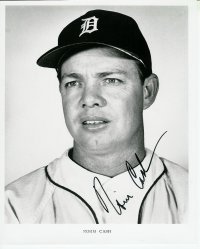
Norm Cash, 1934


Sluggin' Sammy Sosa, 1968


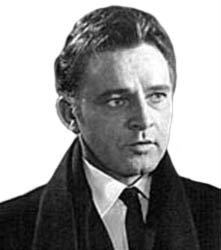
Richard Burton, Welsh actor, 1925

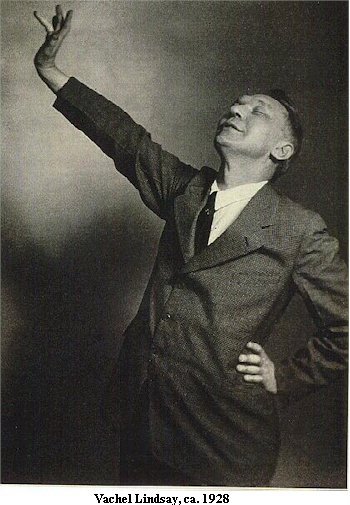
Vachel Lindsay, American poet & performer, 1879


Carol Ann Becker, Miss Universe - South Africa, 1996
(not the year of her birth, obviously)


Your 'umble blogger, in the reign of Ike, the first year